How The Deli Brought Newsletters, Follow-ups and Sales Reporting Together

Franco and Anneke van Vuuren, co-owners of The Deli, sent regular newsletters for their South African food business. But Franco could not easily see which emails were linked to purchases. Campaigns ran through Maileon, while automated follow-ups used Shopify's built-in flows.
He wanted to keep The Deli's familiar newsletter style while bringing campaigns, follow-ups and sales reporting into one app.
The newsletters went out. The sales picture was missing.
Franco could see opens in Maileon, but he couldn't see which campaigns led to sales. Setting up conversion tracking proved too technical, and he gave up on it. Sales reporting was the strongest reason to look for a different setup.
Franco and Anneke sent a Friday newsletter and shorter product emails during the week. Fonts and styling also needed repeated attention as they built each email. For Franco, a central styling setup mattered as a company standard: global font and styling settings that every email follows, as well as reusable templates.
For a replacement tool, his minimum requirement was practical: he needed to recreate the emails The Deli already sent.
Campaigns, follow-ups and sales reports in one place
Sales reporting alongside campaigns and follow-ups
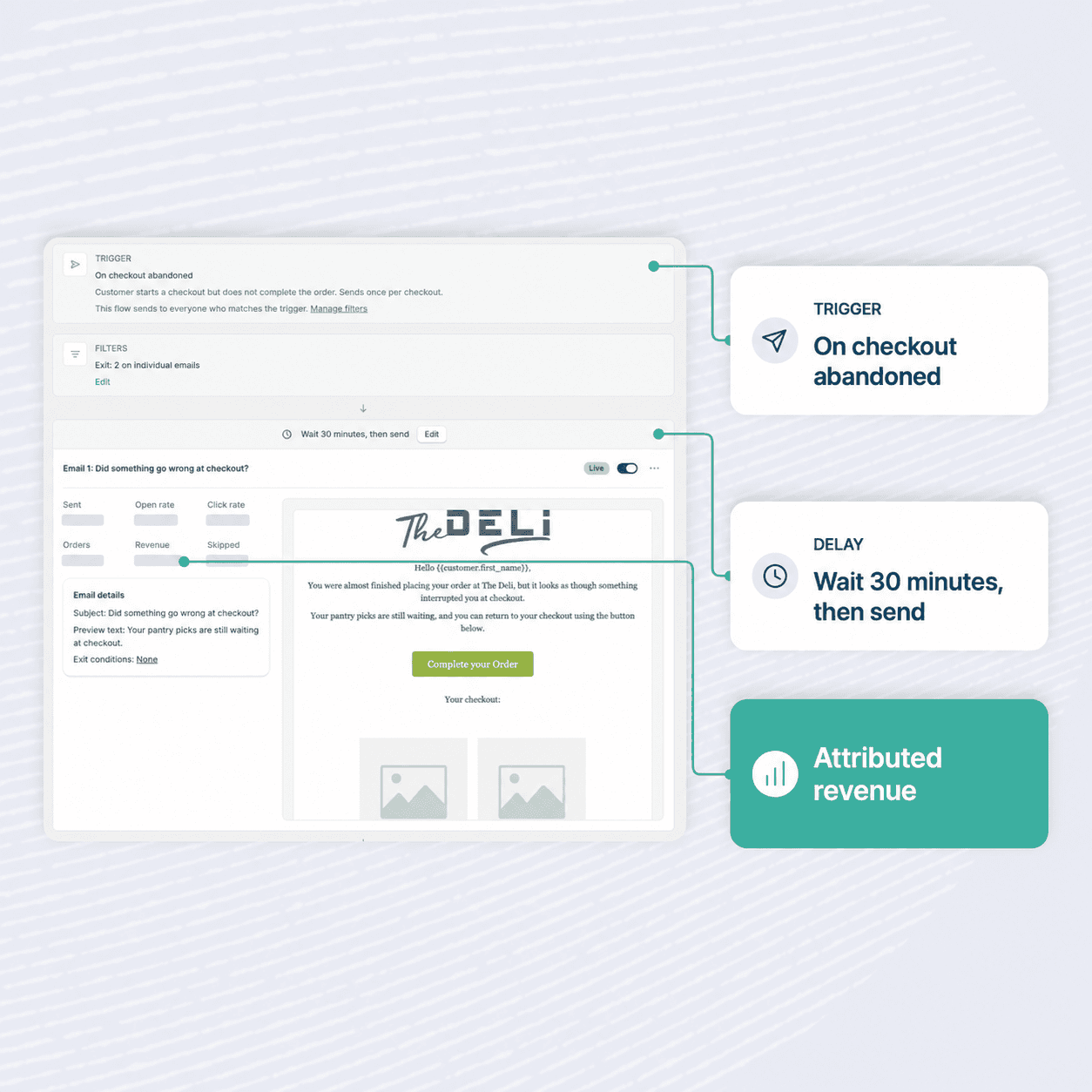
Through Analytics, Franco can see sales attributed to campaigns and automated emails in the same app. He can view the attributed results of a newsletter separately from those of a checkout reminder.
Having everything in one app also appealed to him: campaigns, flows and branding sit together, with his Shopify customer data available for choosing audiences.
A familiar newsletter format, rebuilt in templates
Moving from Maileon meant recreating the format Franco already knew. He used the Template editor to build reusable branded templates, with product blocks and room for The Deli's food stories and promotions. He set up templates and a draft campaign himself.
The Deli's newsletters make room for recipes as well as products. One subject line, “One Bag of Cashews, Three Very Different Recipes,” shows the format Franco wanted to keep. Each new recipe story or promotion now starts from one of those templates.

One company standard for every email
Franco sets The Deli's logo, font, colours and button style once in Branding settings. Every new campaign and follow-up starts from those global settings. Fonts and styling stay consistent without fixing each email by hand. When The Deli's styling changes, one update can apply it to every flow.
His Shopify customer groups become email audiences
Franco uses his existing Shopify customer segments as audiences for Campaigns. He particularly values being able to send to confirmed subscribers and segments.
“If I can create a customer segment, I can now communicate with it meaningfully.”
Franco van Vuuren, co-owner of The Deli
Follow-ups alongside the newsletters
The Deli runs Welcome, Abandoned checkout, Winback and Back in stock flows alongside its campaigns. Its winback sequence sends after 30 days without an order. Welcome emails go out after sign-up, abandoned checkout reminders after a customer leaves checkout, and back in stock alerts when a product returns.
Connecting the email routine to sales
Franco and Anneke already had a regular newsletter routine. With Judge.me Email, they can also see purchases attributed to that work. The reporting puts a sales measure next to opens and clicks, addressing the gap that led them to look beyond Maileon.
Their newsletters and automated follow-ups run through the same app, where they can see the results while using their templates and Shopify audiences.
Franco also values the team's support and willingness to listen. As he wrote in his app review: “They listen, involve me in the product's evolution, and make me feel like a true partner.”


